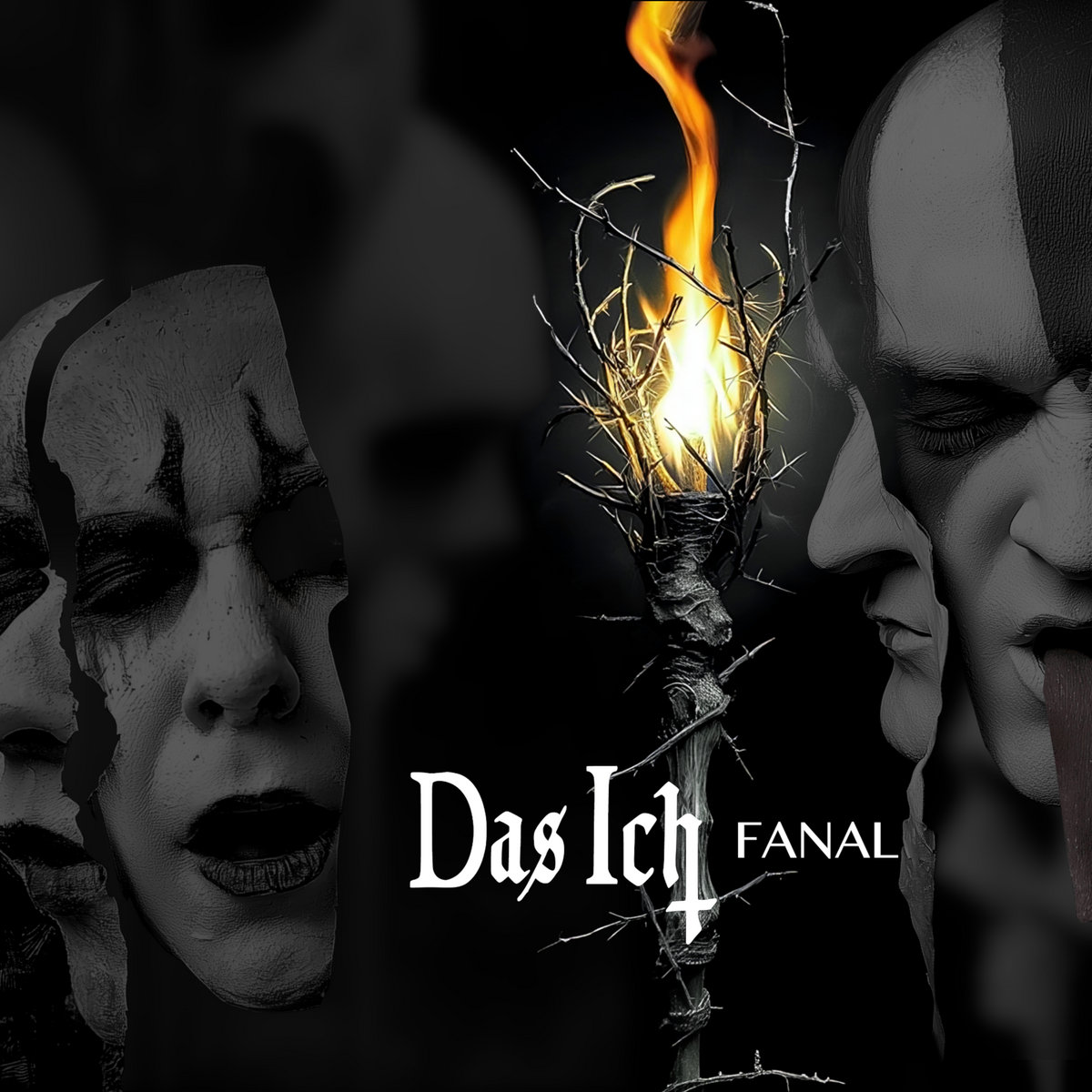
Das Ich
Fanal
Danse Macabre
We recently discussed the last album to be released by longstanding German act Das Ich before new record Fanal, 2006’s Cabaret. But in truth, more than the particulars of that specific album, what that discussion prompted was a holistic review of the unrelenting commitment to the aesthetic forged by Bruno Kramm and Stefan Ackermann in the mid-90s, and how rare, organic, and sincere their examination of fundamental questions of existence through a blend of neo-classical and post-industrial elements has proven to be. The first record from Das Ich in nearly two decades makes only the most minor of adjustments to their style, and brings the band’s overarching strengths into focus.
Longtime fans who look at Fanal under a microscope will perhaps find some minor augmentations to Das Ich’s game. The string arrangements which spiral downwards into the chorus of opener “Menschenfeind” are perhaps richer and more elegantly mixed than they might have been before, the programming tics and sweeps which flesh out the quiet verses before the chorus storms back a bit more finely filigreed, but these are all elements and motifs which feel archetypally Das Ich at first blush, and with a few replays feel wholly in step with their longstanding aims. Similarly, the rhythmic counterpoint between the almost funky, breaks-like pads and kicks which run through first single “Lazarus” and the track’s orchestral strings (which themselves bleed into detuned synth programming at points) is the sort of trick of arrangement which might have been handled a tad more awkwardly in the band’s early days, but now feels downright seamless.
Rather than any major shifts, Fanal instead offers welcome (and at times even subtle) reminders of what’s always worked about Das Ich and what’s made them irreplaceable in their absence. The interplay between Ackermann’s demonic rasp and Kramm’s classically operatic punch-ins on “Lazarus” is reflective of their dynamic, one without serious parallel in industrial or darkwave. That interplay sits at the heart of the examination of the self and its different facet which has always been Das Ich’s bread and butter, with the dialectic of Beethoven’s String Quartet No.16 (“Muss es sein?” “Es muss sein!”) feeling a more suitable comparison than any run of the mill Schwarze Szene duet. A more subtle back and forth is found on “Brutus”, with Kramm’s fretting responses to Ackermann’s seething adding an almost wistful melancholy and unease (rather than classical damnation) which matches the moody harmonies of the synth strings and traditionally industrial programming.
After a layoff as lengthy as that between Cabaret and Fanal, it’s perhaps tempting to expect or even demand some sort of massive lateral shift in style, or a potential capper on the project of Das Ich as a whole if speculation about the band drawing to a close plays out. But the truth is that the style, commitment, and honesty Fanal reflects is exactly the sort of combination which had us pining away after Das Ich during their absence. In The Gay Science, Nietzsche formulates the notion of eternal recurrence as a measurement of how one has lived one’s life, and whether repeatedly reliving it would be a blessing or a curse. For all the sturm and drang which has made up Das Ich’s catalog, Fanal is proof positive of how desirable that struggle has been. Recommended.