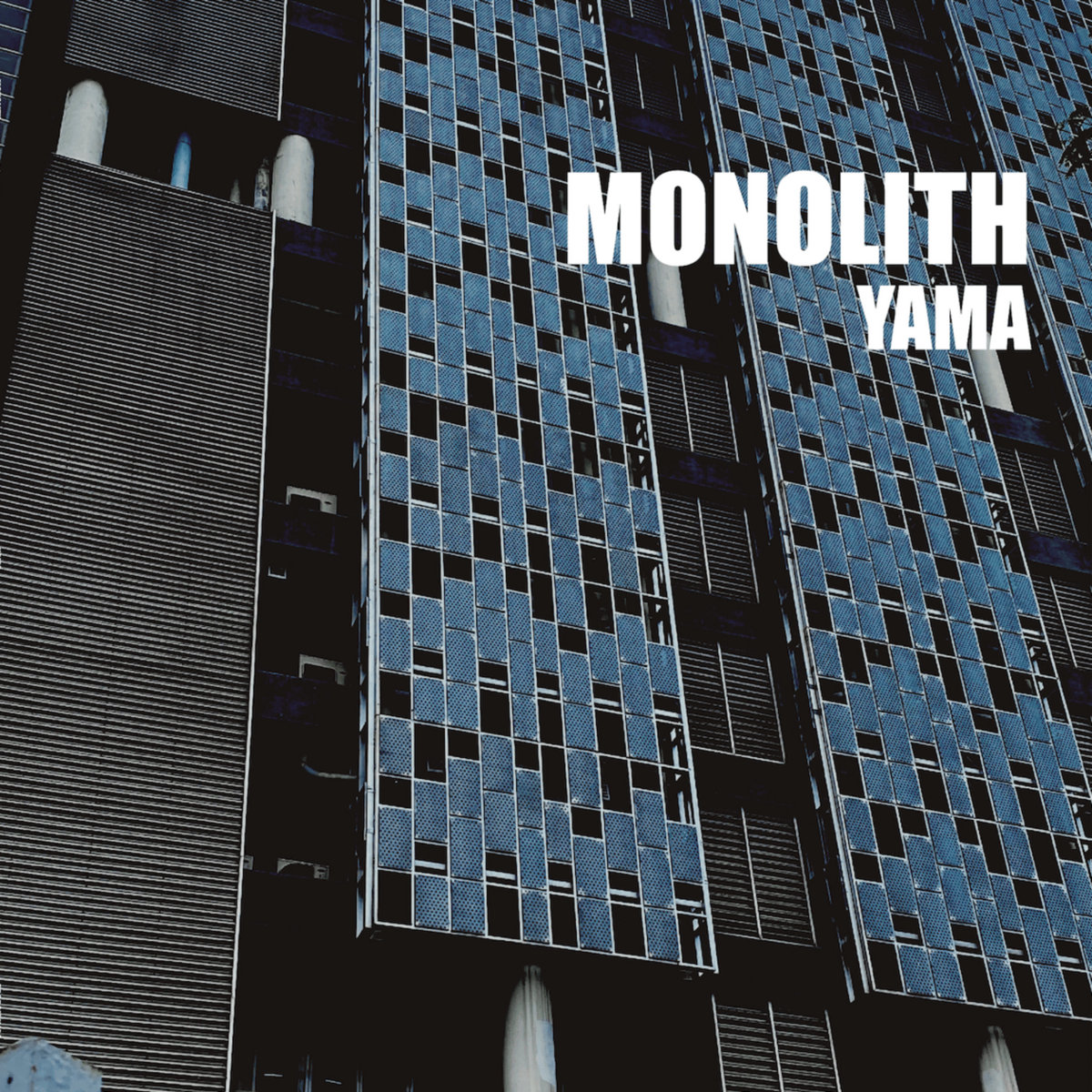
Monolith
Yama
Som-Records
Eric Van Wonterghem’s Monolith should need little introduction at this point. The Absolute Body Control and Klinik pioneer’s solo project has served as a complement to his tenure in Sonar, both of which helped to field test and codify rhythmic industrial as a sub-genre. Thirteenth LP Yama signals a shift from the TBM-inflected style which shaped 2020’s Unnatural Bodies and 2023’s Concrete Nature, and finds Von Wonterghem exploring a style of tribal industrial which has always run parallel to his signature sound but never intersected with it as fully as it does here.
The first pair of Yama‘s tracks establish a turn away from Monolith’s strident and staccato rhythms, with beats instead arranger in either skittering polyrythm or loping shuffle, with didgeridoo-like drones and uneasy pads slowly shifting around them. If that description evokes turn of the millennium memories of records by the likes of This Morn’ Omina and Mlada Fronta, well, those comparisons are pretty accurate. Elsewhere, any dancefloor ambitions whatsoever are ceded on “Mahakali”, which is comprised entirely of phasing distortion and windy ambience adorning a single processional kick holding at about 60 BPM. Even the timbre of the metallic percussion on “Shiva”, with its lightly pinched echoes and filters connoting traditional steel drums and hammered strings more than the pure digital crunch more commonly associated with Monolith. Sure, some of Yama‘s thematics can be found throughout the existing Monolith catalog, going back to 1999’s Tribal Globe, but they’ve rarely been matched by this restraint in arrangement or rhythmic intensity.
Interestingly, Yama has a pair of tracks appended specifically listed as bonus tracks, and after the distinct aesthetic of the record’s core eight tracks, a contrast with these two pieces more in line with recent Monolith records is easy to hear. While there’s something of the record’s hypnotic mode still in effect on “Skula”, its hazy ambience feels more akin to that of modern dark techno parties than ancient rites, and other bonus track “Temple” feels entirely in alignment with Concrete Playground in its clipped, stuttering delivery of frapped-out kicks.
For all realistic purposes, the adjustments Yama represents to Monolith’s style are not hugely drastic. As alluded to above, the thematic and production elements which define the record have never been foreign to Monolith, they’ve simply never been given this much sustained time and focus. While those pining for a style of tribal industrial which has been on the wane for the past decade will get a fix of it here, longtime Monolith listeners will likely be drawn to the idea of Van Wonterghem not running a full court press and giving his compositions sustained meditative space.