Seeming
The World
Artoffact Records
It’s 2013. We receive an e-mail from Artoffact, regarding a new band from Alex Reed of goth-leaning synth act Thoushaltnot, attached is an mp3 of “The Burial”. One understated but powerful line sticks in my mind after listening to the song; “To the killers of animals/Nature will bury you”, an articulation of something with my own relationship to the natural world that had been occupying my mind. I don’t think “I felt seen” was a thing we were saying then, but that’s how it struck me.
It’s 2017. As I stand in my parent’s kitchen in Halifax Nova Scotia on a Sunday morning making lunch, my dad looks up from the New York Times crossword and asks me what we’re listening to. I tell him it’s the new album from Seeming, and the song is “Stranger”. He pauses for a moment, says “Good lyrics”, and returns to his puzzle. This is one of the few occasions that my father, a jazz, soul and blues devotee, acknowledges music I have played in his presence in a positive way. A few years later, I would slide the song into a playlist of music for his celebration of life, between Lyle Lovett’s “If I Had a Boat” and John Prine and Amy Taylor’s “In Spite of Ourselves”.
It’s 2021. After a lengthy hiatus from work due to lockdown, my partner returns to her in-person job after 9 months. When she arrives home after the first day, she tells me that she listened to Seeming’s “Remember to Breathe” over and over to stay calm while navigating the somehow both scary and mundane world outside of our one-bedroom apartment.
There are more stories like these, but I am sharing them to make it clear, I am not writing about Seeming’s new album The World from a position of objectivity. Beyond my relationship with the post-gothic-post-everything project’s three previous albums (and their numerous singles and EPs), Alex Reed is a friend, and someone whose work as a musician and as an academic and author I admire. And while I think the convenient myth of neutral criticism is useful and maybe even necessary to write about art with any degree of authority, I wouldn’t feel honest trying to shore up that cracked veneer of dispassion in this case. What follows, my thoughts on Seeming’s new album The World, are gonna be personal and coloured by a lot of my own feelings and experiences over the last twelve years. I hope that’s cool with you. Okay, deep breath, let’s go.
Seeming’s appeal is generally rooted in appreciation for Alex Reed’s radical sincerity. While his songs have gotten more grandiose with each successive album, they’ve equally become more intensely personal and connected to the project’s main concern, that is the idea of an end to everything as we know it, and whether humanity surrendering the planet to nature would necessarily be a bad thing. So where the band’s debut album Madness and Extinction broaches this topic both lightly (“Goodnight London”) and heartbreakingly sadly (“All Of This Really Happened”), and 2020’s The Birdwatcher’s Guide to Atrocity found Reed guiding the listener through difficult social and political terrain, The World finds him trying to square his thoughts and feelings with the titular concern, while it’s still around to do so.
The risk of that approach is considerable; an oft-repeated reason for people not being able to get into Seeming is simply finding Alex Reed’s theatricality, both in his vocals and in the emotional bombast of the songs, well, overwhelming. For devotees, it’s tempting to think of that as a personal failing stoked by life in this irony poisoned era, but the answer is likely a lot more simple. Either you resonate on the same frequency as Reed on a given song, or you don’t. If it’s the former, you’ll feel like he’s singing it to you directly, that it might even somehow be about you, even if you’ve never met him. If it’s the latter your enjoyment will have to come via the (considerable) songcraft or lyricism, and involve side-stepping any awkwardness or *sigh* “cringe”. As an initiate into the band’s modest cult, I can’t explain you into an appreciation for Seeming’s unbridled earnestness, couched in poetic metaphor as it may be. What I can say though, is that Reed’s journey through The World is the barest and least obfuscated work of his career, and there’s an absolute thrill in being a witness to the artist that approach unveils.
Take the opener “A Failure of Imagination”, where Reed jumps directly to the heart of the record’s themes, asking if the pressures of life on the downward slide of western society, where love is “under pressure and under the gun,” has blinded him to larger possibilities. It’s a hell of a tune, taking back the incendiary power of the traditional American folksong from the stomp-clap-whistle set and rendering it in electronic grandeur, complete with a reference to Edna St. Vincent Millay’s “The Wild Swans” for thematic flavor. It’s a lot, but it’s also gloriously liberating, an anthem of – if not self-empowerment – then of allowing yourself the grace to ask scary questions about your place in the grand order of things. It’s opposite number at the tail end of the record, “Winterlight,” does not provide answers to those questions, but at least finds some comfort in engaging with what’s around us as it is, and stripping away the things we use to distance ourselves from the discomfort of that act. “There were no more jokes about suicide/It’s the deal I struck” he sings, looking back on the discarded crutch of facetiousness as he climbs to the song’s climax, a celebration of being present and alive for the things and people that matter.
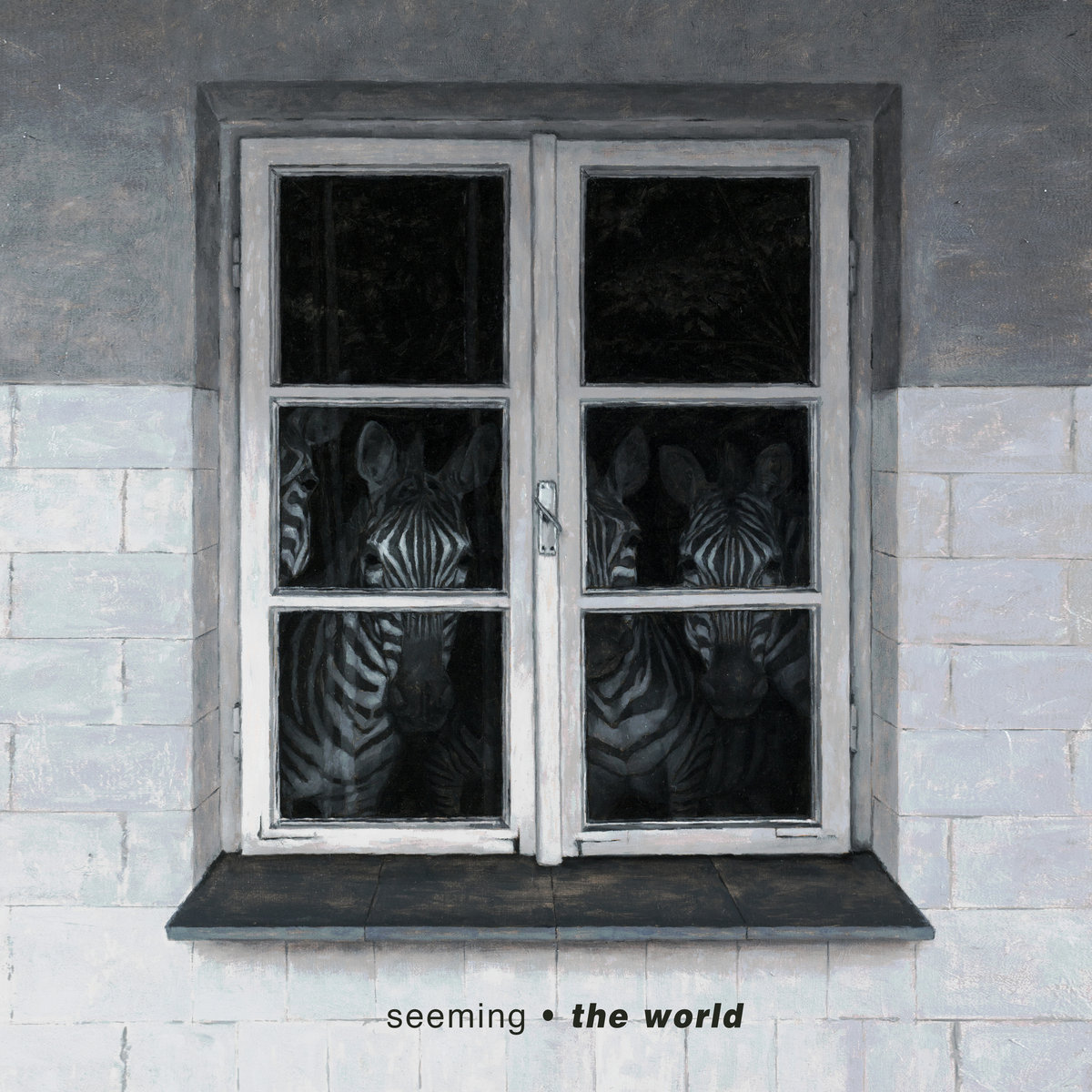
Lest you feel like the album is weighed down by the heaviest of heavy existential questions, it also comes replete with moments of triumphant catharsis. The baroque synthpop of “Zebra Tramples Horse Trainer”, with its multi-syllabic rhyme scheme may be about slipping your bonds and forceful authenticity in the face of authority, but its follow-up, the stunning low-key electropop of “The Tomorrow Place” reassures you that that struggle isn’t permanent; “You won’t have to be brave/you won’t have to be human” is a deeply comforting affirmation in ways I have yet to fully unpack for myself. That feeling is echoed and amplified on the simple, beautiful piano led “Assassin’s Lovesong”, as good and sad a popsong as Reed has ever written, not just for its understated but strangely familiar melody, but for the simple expression of the comfort of companionship, even from a distance, when facing towards the end of ourselves. Whether quiet and reflective, or at the highest tier of stageworthy melodrama, Reed sings with rare conviction and unfettered passion, unwavering in the face of what is both uncertain and what is guaranteed.
Sitting fittingly at around the halfway point of the record, the speedy drums and lush, spiraling piano of “Any Other World” yields the key to The World, insofar as I understand it anyway. It’s a simple repeated statement surrounded by images of chaos and loss: “This world is this world”. As the outro of the song suggests, there may be a better world somewhere, but this is the one we inhabit and we owe ourselves and each other a place within it. Whether you can see anything of your own thoughts or feelings in how Alex Reed finds his way to the acceptance of that, it’s an idea worth internalizing. The World is vast and unknowable, but we can still find meaning in how we move through it.
It’s 2025, and I’m walking home at night. It’s been another long and difficult year, and I had it easy compared to many, an understanding that carries its own load of guilt and recrimination. I hear the words “I’m gonna break out my skin/I’m more than the pain I’m in” sung by a familiar voice in my headphones, and I stand still for a moment to consider them. When I start to walk again, it’s with the reminder to be present, for myself, and yeah, for the world I live in.